


Generative AI is transforming how students learn, research, write, collaborate, and demonstrate understanding. This is forcing higher education institutions to rethink what meaningful assessment looks like online. In this article, we explore 10 practical strategies for designing more effective online assessments in the age of AI and introduce some of the emerging frameworks helping institutions navigate this rapidly evolving landscape.
Generative AI has fundamentally changed the assessment conversation in higher education.
When students can instantly generate essays, summaries, code, research support, and even study guides using tools like ChatGPT and Claude, traditional online assessments no longer provide the same visibility into student learning that they once did. It is one of the reasons why OES is spearheading our Assurance of Learning framework globally.
It’s important to bear in mind that AI does not signal the end of academic integrity or meaningful assessment. However, it does signal the need for smarter assessment design.
Institutions need to redesign assessments to emphasize critical thinking, encourage application and reflection, foster collaboration, and make the learning process more visible and valued, all of which add up to a more authentic demonstration of learning.
So here are 10 practical strategies for designing online assessments that remain rigorous, engaging, and meaningful in the age of AI:
1. Start with assessment blueprinting and AI intentions
Effective assessment design begins with clarity.
Before creating an assessment, educators should define: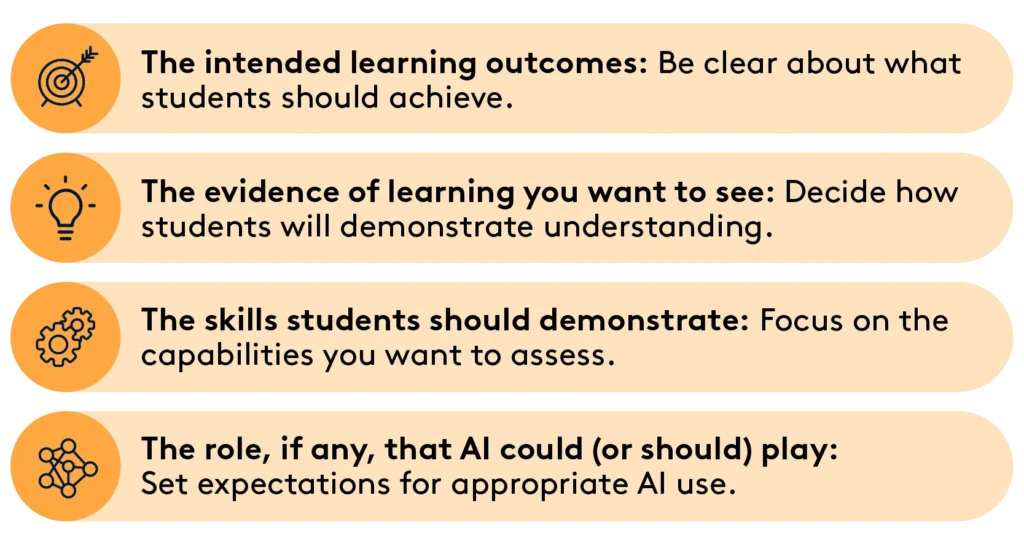 They also need to set their intentions to:
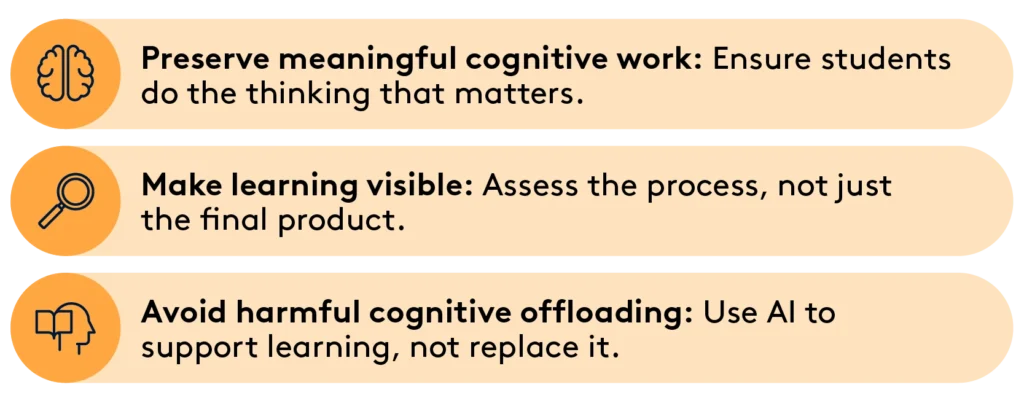
In the AI era, assessment blueprinting must go beyond content mastery alone. Institutions are increasingly required to think carefully about when AI use is appropriate and when it is not. And those expectations must be communicated to students and other stakeholders.
Some institutions are beginning to adopt structured approaches for defining acceptable levels of AI involvement in assessment tasks. For example, they may allow AI usage in brainstorming or collaborative drafting.
By clarifying expectations early, educators can reduce ambiguity while creating more authentic learning experiences.
2. Design questions AI cannot easily answer superficially
The increased usage of and access to generative AI means that simple fact-recall or generic essay prompts may no longer provide meaningful insight into student understanding.
Instead, effective online assessments should prioritize:
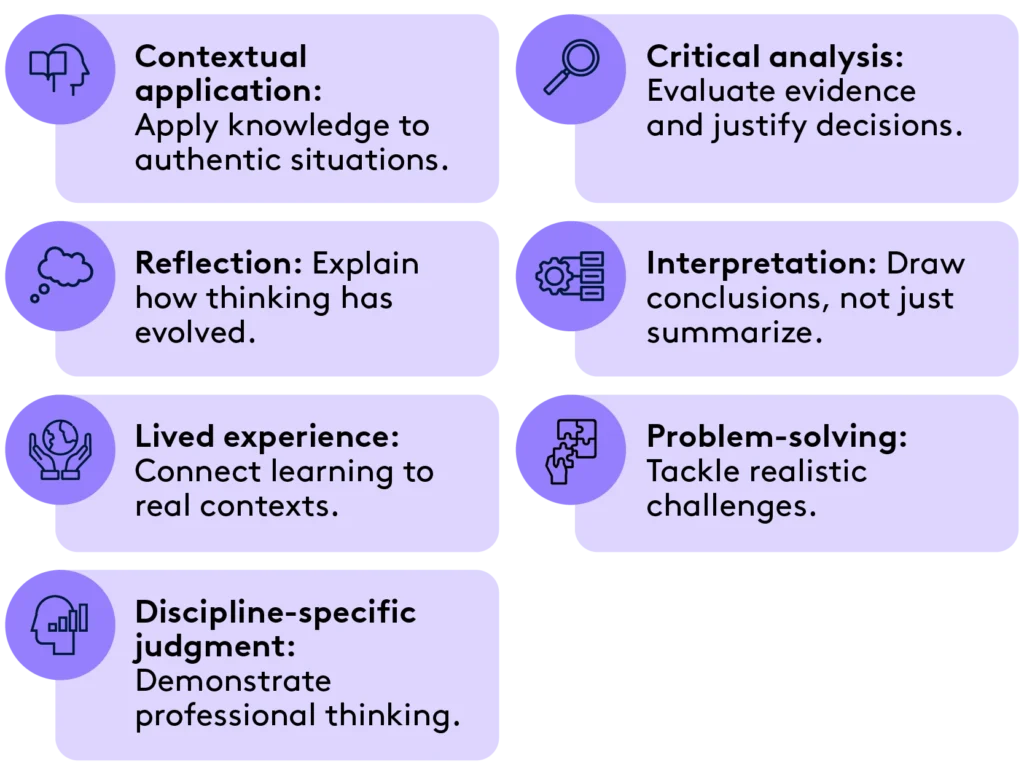 AI can generate information quickly, but it’s far less effective at replicating nuanced human reasoning, personal reflection, contextual awareness, and applied professional thinking.
For example, rather than asking students to summarize a leadership theory, educators might ask them to apply that theory to a workplace challenge they have personally experienced, critique a real-world case study, or explain how their thinking evolved over time.
These types of assessments make learning more authentic while encouraging students to engage more deeply with course material.
3. Diversify assessment methods beyond traditional essays
One of the most important shifts happening in higher education is the move away from overreliance on a single assessment format, and with good reason! In the age of AI, diverse assessment methods are becoming increasingly valuable because they allow educators to evaluate learning from multiple angles.
Consider incorporating:
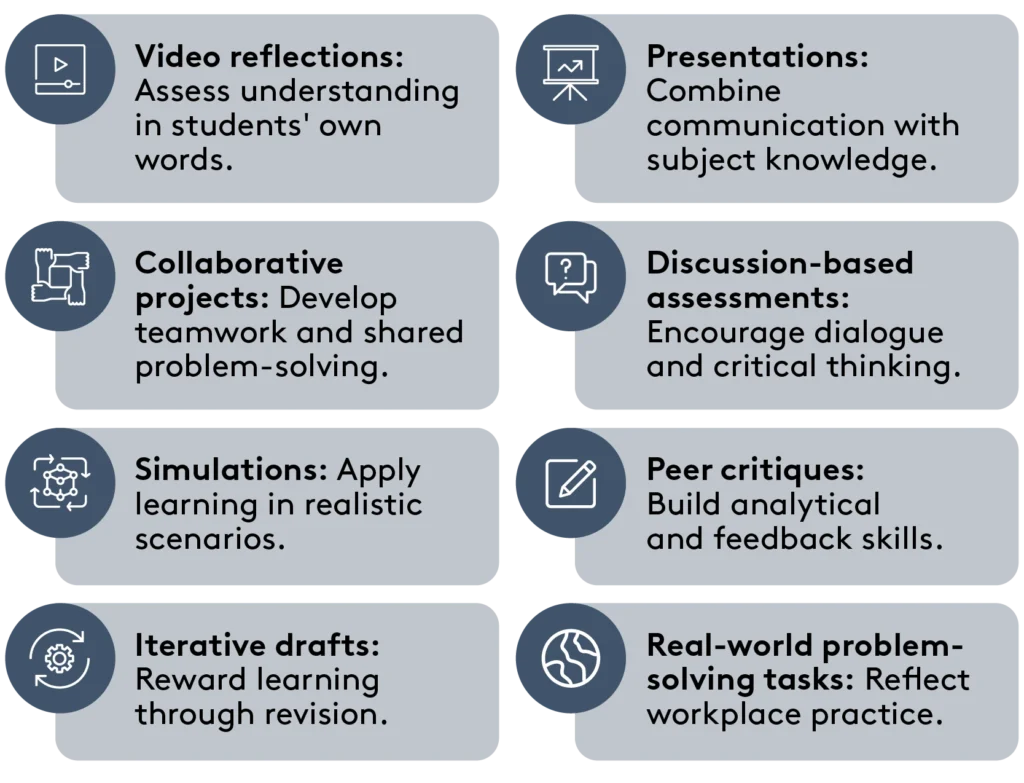 Different assessment formats reveal different dimensions of student learning. They also better reflect modern professional environments, where success rarely depends on producing a single written output in isolation.
4. Build transparency into every assessment
Many academic integrity challenges emerge from ambiguity rather than misconduct, particularly as institutions grapple with policy and governance around AI usage. The antidote is clarity.
Students need clear guidance around:
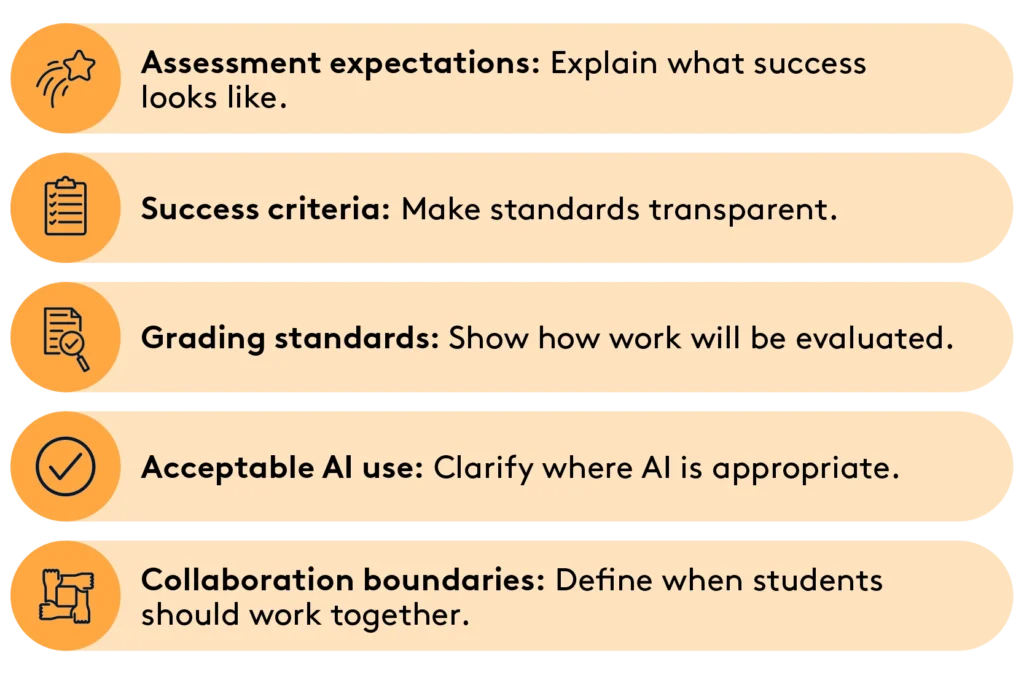 In the AI era, transparency matters more than ever. Emerging frameworks such as Transparency in Learning and Teaching (TILT) help institutions rethink how purpose, process, and evaluation criteria are communicated throughout the learning journey.
Providing clear rubrics, examples, and instructions not only improves student confidence, but also supports equity and consistency across online learning environments.
When students understand what meaningful success looks like, they are far more likely to engage authentically with the learning process.
5. Responsibly use AI as a learning tool
Much of the early conversation around AI in education focused on plagiarism detection and academic misconduct.
But the conversation is rapidly shifting toward a more important question:
How can AI support learning?
Some institutions are now using AI to create:
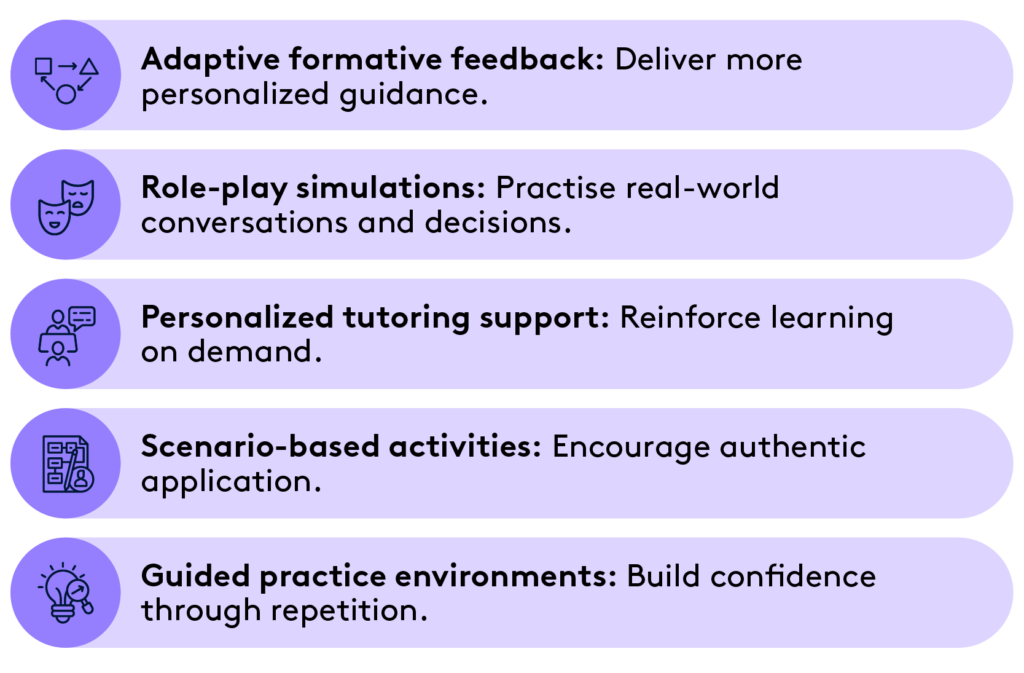 These approaches allow students to practice skills and engage with course concepts in more dynamic ways. They also expedite the feedback loop to give students more frequent and relevant guidance.
Throughout, educators remain central to the process. Human judgment, facilitation, mentorship, and feedback continue to play a critical role in ensuring meaningful learning outcomes.
6. Incorporate real-world and workplace-relevant scenarios
One of the most effective ways to strengthen online assessments is to make them feel authentic.
Assessments that mirror real-world challenges encourage students to apply knowledge in practical, meaningful contexts while developing workplace-relevant skills.
For example:
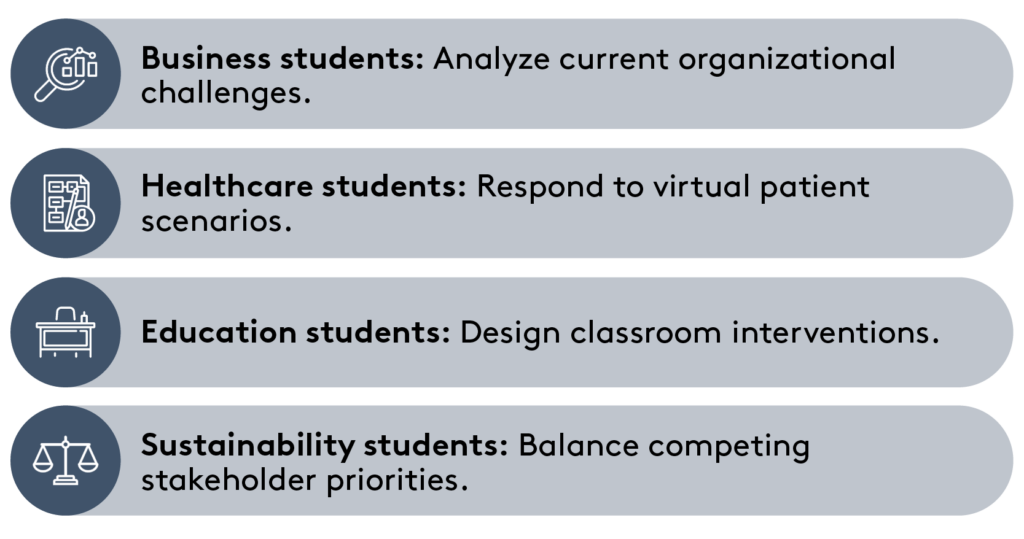 The question is no longer whether graduates will use AI professionally. The question is whether institutions are preparing them to use it critically, ethically, and effectively.
In many professions, AI is already becoming part of everyday workflows. Authentic assessment should therefore move beyond simply measuring what students know and begin evaluating how they apply that knowledge, exercise judgment, verify information, and make decisions when AI tools are available.
The rise of AI makes authentic assessment more important, not less. If students will use AI in the workplace, assessments should reflect that reality by evaluating how effectively they can work with AI, question its outputs, identify its limitations, and apply human judgment in context.
Well-designed real-world scenarios create opportunities for students to demonstrate precisely those capabilities while making learning more engaging, relevant, and meaningful.
7. Require reflection and process visibility
In an AI-enabled environment, understanding how students arrived at an answer can be just as important as the answer itself. To this end, reflective and process-oriented assessment practices are becoming increasingly valuable.
Consider incorporating:
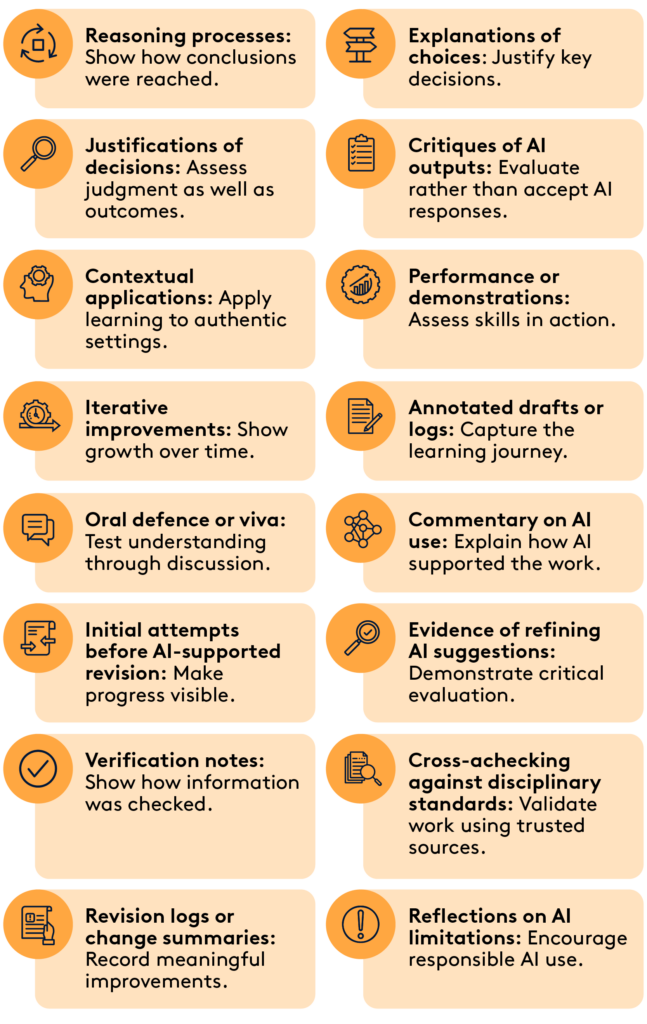 These elements encourage students to demonstrate their decision-making and intellectual growth throughout the assessment process. They also help educators better understand student learning while reducing overreliance on polished final outputs alone.
In many ways, the AI era is pushing higher education toward a stronger emphasis on learning processes rather than purely finished products.
8. Foster peer assessment and collaboration
Online learning can sometimes feel isolating. Collaborative assessment practices help create stronger learning communities while developing essential human skills.
Peer assessment activities encourage students to:
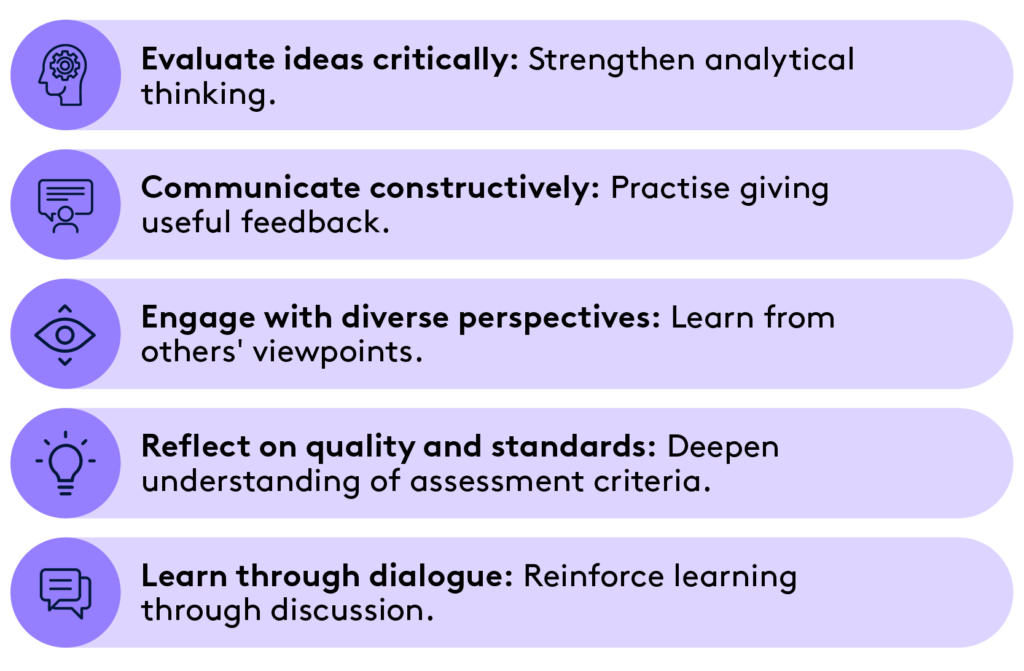 In an AI-enabled environment, uniquely human capabilities such as collaboration, empathy, communication, and judgment become even more valuable. Digital discussion forums, peer-review tools, collaborative documents, and group simulations are all useful methods to support meaningful interaction in online courses.
The goal is not simply to assess individual performance, but to cultivate deeper engagement and shared learning.
9. Prioritize frequent, formative assessment and feedback
Traditional high-stakes assessments often provide feedback too late to meaningfully support learning.
Frequent and formative assessments create opportunities for students to receive more immediate guidance and reflect on it throughout the learning process.
These low-stakes activities might include:
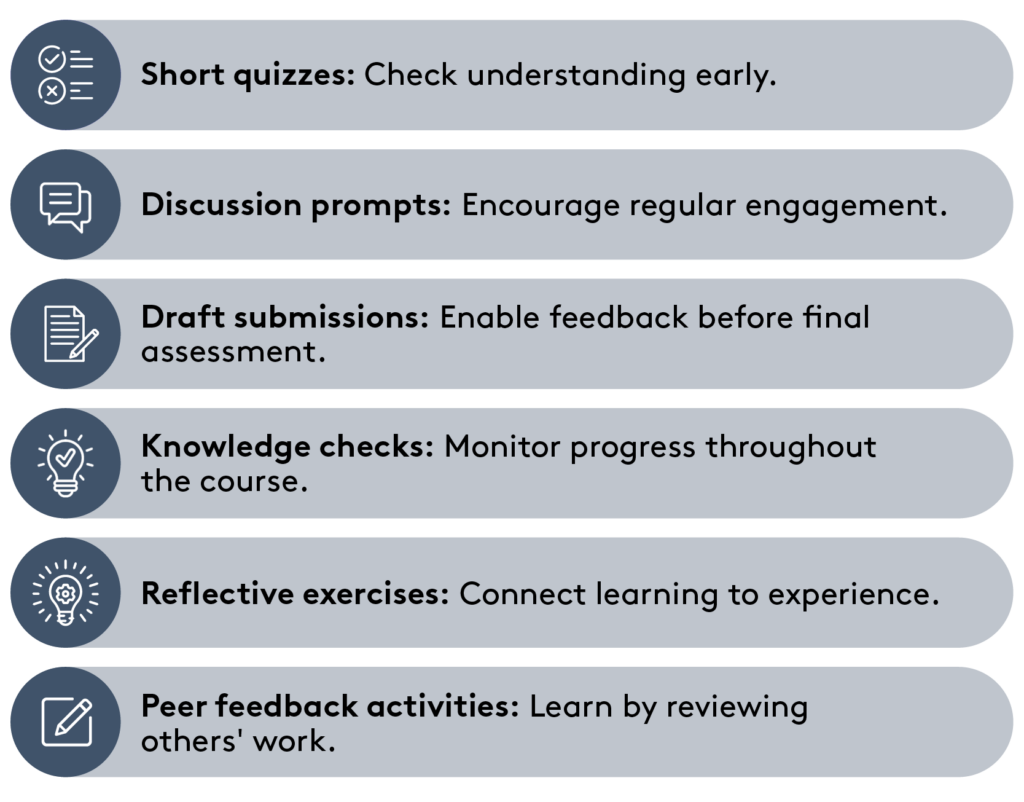 AI is also accelerating interest in adaptive formative assessment models that provide students with more personalized, real-time feedback throughout the learning process, which is something that has traditionally been difficult to achieve at scale in higher education.
When implemented effectively, formative assessment shifts learning into an ongoing developmental process.
10. Focus on growth, judgment, and human insight
As AI tools become more capable of generating content, the uniquely human dimensions of teaching become even more important.
Meaningful feedback should go beyond grading alone. It should help students:
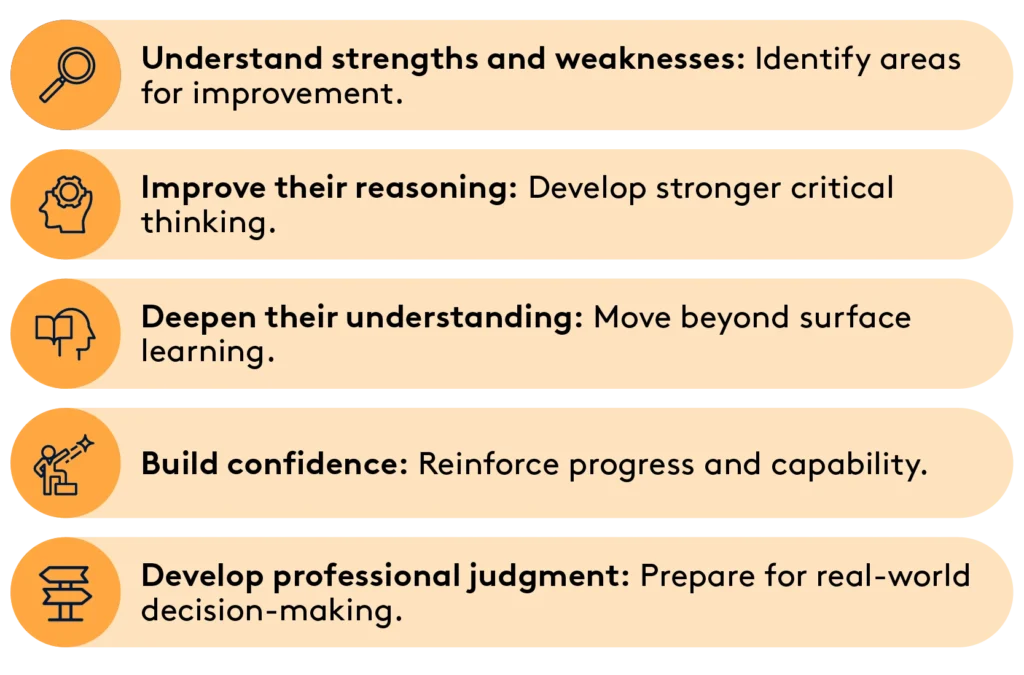 Audio and video feedback, coaching conversations, and personalized commentary can all help strengthen instructor presence in online learning environments.
Students do not simply need a score or more information. They need guidance, interpretation, encouragement, and thoughtful challenges.
AI may assist with aspects of assessment and feedback delivery, but human insight remains central to transformative learning experiences.
Designing assessments for the AI era requires a new playbook
As generative AI reshapes higher education, institutions are being challenged to rethink not only academic integrity, but also transparency, feedback, adaptability, and authentic learning design.
Frameworks exploring adaptive learning, ethical AI integration, formative assessment, and transparent teaching practices are beginning to influence how universities approach online learning at scale.
OES explores these ideas in greater depth in our resource, Leveraging AI for Transparent and Adaptive Learning, which examines how institutions can integrate AI into teaching and assessment responsibly, ethically, and effectively.
Sources
Hansen-Brown, A., Sullivan, S., Jacobson, B., Holt, B., & Donovan, S. (2022). College students’ belonging and loneliness in the context of remote online classes during the COVID-19 pandemic. Online Learning, 26(4), 323–346. https://doi.org/10.24059/olj.v26i4.3123


