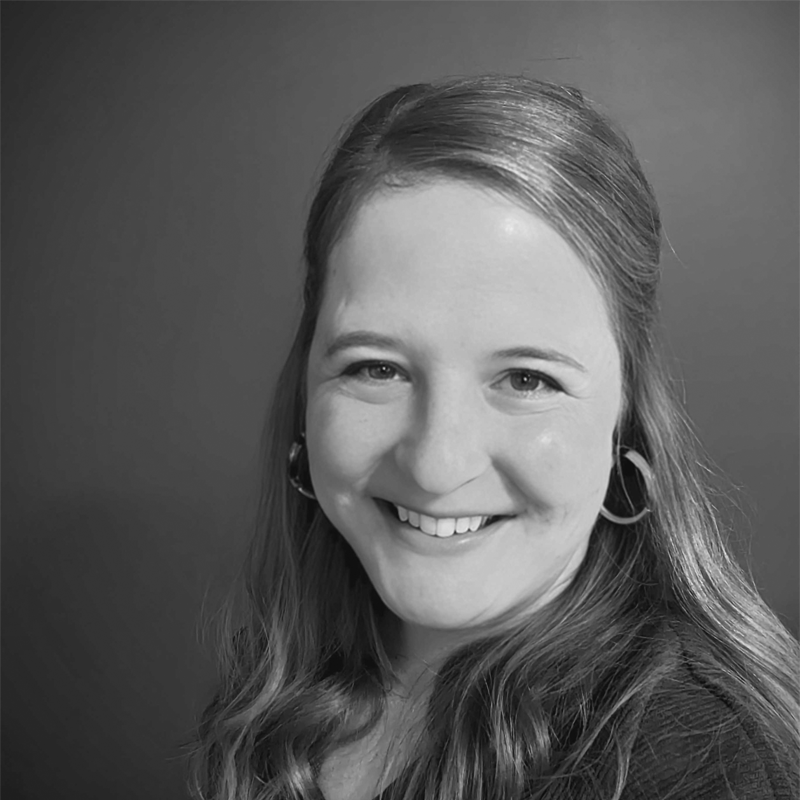


Opportunity sits at the heart of every great education story, and for Jodie Klein, it’s been the defining thread of her career. From international development and global higher education to her current role as VP, Partnerships at OES Learning Solutions, Jodie has focused on one thing: opening doors. In this conversation, she reflects on the experiences that shaped her path, the power of education to transform lives at scale, and how saying yes to opportunities that interest you can add up to a meaningful career.
Your background spans international development, global higher ed, and now online learning. What’s the through-line across it all?
Opportunity! Education opened doors for me, and I’ve never stopped thinking about it that way. We all have ambitions that are shaped by what’s within reach. Growing up in a rural area, the only careers I knew about were the ones in my community. College changed that. I started meeting international students and something clicked. I became curious about the world beyond what I’d grown up in.
I did a communications internship in Thailand in the aftermath of the 2004 Indian Ocean Tsunami. When I came back, I made the somewhat wild decision to start studying Mandarin in my senior year. I went on to study it at a graduate level too, and that commitment to entering other people’s worlds, linguistically and culturally, shaped everything that followed.
That’s when I first really understood what education can do. It’s a door. And once you walk through it, there are more doors.
You spent years in international development on scholarship and exchange programs. What drew you to that work?
Again, opportunity was always central. I was facilitating experiences that changed the trajectory of young people’s lives. I remember sitting across from students in countries like China and Brazil for scholarship interviews and knowing that what happens in that conversation could open opportunities they can’t even imagine from where they’re sitting. I still see some of those faces on my LinkedIn feed, and their successes make me genuinely proud.
I also want to be honest: I recognize the privilege of being able to follow curiosity the way I did. Not everyone gets that. Which is part of why I care so much about scale. If we can design programs that reach more people, that matters.
What eventually pulled you toward edtech?
The skill set translated directly: building partnerships with universities, earning trust with academic leadership, translating institutional priorities into real solutions. The work looks different but it feels very purpose driven.
You’ve now been at OES for over three years. First as Account Director, now as VP of Partnerships. What does this chapter feel like?
It feels like we have real momentum! When I joined, we were operating as Construct Education and doing great work. This past year, coming fully together under the OES global brand with a new CEO, Jon Davey, driving energy across the organization — it feels like a new chapter. I believe our team is capable of remarkable things.
I mean that specifically. I’m always telling people our media team in Cape Town could make commercials. The production quality is extraordinary. I’ve recently learned Cape Town is actually a hub for that kind of creative work, which makes sense. This is a good illustration of the exceptional global talent we bring to every project.
We’re well-poised to continue building flexible, institution-led partnerships that help institutions grow and reach learners they couldn’t reach before.
As institutions continue to invest in online learning, what will define success in the next phase of growth?
I think we’re entering a really important phase of accountability for online learning. For a long time, the conversation was about access and scale. How do we reach more learners, how do we grow? That still matters, but it’s no longer enough on its own.
What’s going to differentiate programs now is quality.
That means quality in the learning experience through thoughtful design and strong production, making content that engages learners in a meaningful way. It also means thinking about accessibility from the very beginning, not as something you layer on later. If we’re serious about expanding opportunities, then programs need to work for all learners, by design.
That’s where partnerships can play a really powerful role. Done well, they allow institutions to scale without compromising on any of those elements. So, I think the future of online learning is less about choosing between scale and quality, and more about how you deliver both, in a way that is accessible and engaging.
Looking back, were you strategic about your career path, and how do you feel about where you landed?
Strategic might not be the word for it, but I wasn’t wandering. I was following what genuinely excited me and saying yes to opportunities that felt meaningful, even when I couldn’t see exactly where they were headed. Learning languages, living abroad, doing development work in places where I was very much an outsider. I didn’t know how it would all translate.
But it did. Every bit of it built something: the ability to understand what people actually need, to navigate ambiguity, to build trust across real differences. I think that’s what I’d want younger people to hear. You don’t always need to know where an opportunity leads to know it’s worth taking. The experiences compound in ways you can’t fully anticipate. And that, for me, is really what opportunity means.