


Learning design (or instructional design) is the practice of designing online learning experiences that help people acquire knowledge and skills. Learning designers combine learning psychology, instructional science, and human-centered design to focus on how learners think and feel and to help them apply what they learn in real-world contexts. This article goes behind the scenes of learning design to explain what learning designers do, how the learning design process works, and why thoughtful learning design is essential for impactful education and training programs.
The great graphic design theorist, Donald A. Norman, once said, “Good design is actually a lot harder to notice than poor design, in part because good designs fit our needs so well that the design is invisible.” Well, learning design is much the same.
If you’ve ever taken an online course that felt seamless and engaging, you might not have considered the meticulous work behind its creation. A well-designed learning experience is much more than assembling slides, content outlines, interactive elements, and quizzes.
Behind every great course is a team of learning designers that integrates psychology, instructional science, and human-centered design to craft learning experiences that improve our world, one mind at a time.
Psychology helps us understand how learners process information and what motivates them.
Instructional science provides frameworks to structure content and activities for maximum learning. Human-centered design prioritizes accessibility, engagement, and real-world application because learners who have a meaningful experience can apply what they learn in the real world.
This holistic approach makes learning memorable and effective, and applies to everything from employee training and student education to enterprise and leadership development programs. But what does a learning designer actually do?
Understanding Learners and Defining Learning Goals
Every successful course starts with a fundamental question: What should learners take away from this experience? Before creating content, learning designers focus on three key areas:
- Organizational goals – what are the intended business or educational outcomes?
- Learner needs – who are they? What challenges do they face?
- Learning journey – how do we ensure the course is engaging and effective?
They then work closely with subject matter experts (SMEs), typically from an institute or organization, to plan and deliver learning materials that address all three areas and achieve the ultimate goal of optimal knowledge transfer.
Case Study: Designing a Leadership Development Course
Some clients come with a clear vision; others rely on the learning designer’s expertise to shape their ideas into an engaging learning experience. Recently, a client wanted us to develop a leadership training course for mid-level managers with the following requirements:
- A polished, high-end experience inspired by elite British business publications.
- Engaging, interactive case studies inspired by an American publishing house that reflect real-world leadership challenges.
- A tight budget and a six-week sprint to deliver six modules. (Never a dull moment!)
Empathy and Discovery in Learning Design
Good learning design begins with research. Great learning design starts with empathy. An excellent learning designer looks beyond the content and steps into the learner’s world to understand their motivations, challenges, and expectations for the learning journey — all of which begin to give a clearer idea of what the destination looks like.
For the leadership course, we had to balance the client’s vision (a polished, intellectual learning experience) with the practical needs of busy managers. Through discovery calls, surveys, and SME interviews, we developed learner personas to ensure that the content resonated.
Key questions included:
- What challenges do these managers face daily?
- How can we make the content practical rather than theoretical?
- What interactive elements will keep them engaged?
From these conversations, we created a discovery analysis summary that identified learner backgrounds and contexts, key challenges, and necessary design elements. This approach ensured we crafted an experience that felt authentic and delivered real value in return for the time learners invested.
From Vision to Reality: The Learning Design Process
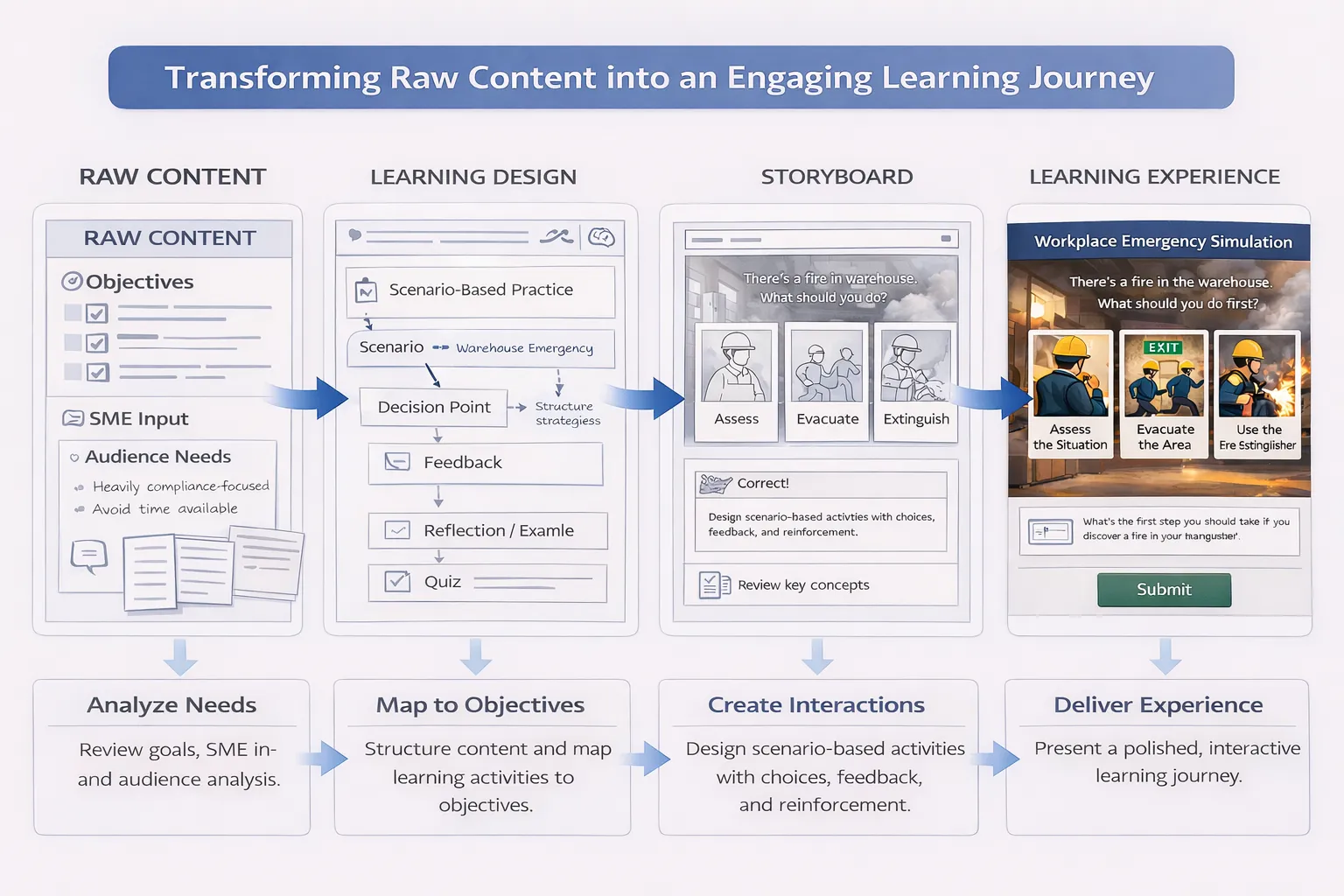
With a strong foundation of research and empathy, it’s time to structure the learning journey. Once we define learning goals, the first step is to translate them into a structured blueprint.
This involves three core elements:
- Course outline – high-level structure mapping key topics, objectives, and assessments.
- Blueprint – a detailed framework defining activities, interactions, and evaluation strategies.
- Storyboarding – a visual representation mapping out text, graphics, and multimedia elements.
For the leadership course, we incorporated:
- Case-based learning, presenting real-world leadership dilemmas.
- Microlearning videos, offering bite-sized, engaging lessons.
- Interactive decision-making, allowing learners to practice leadership skills in simulated environments.
One of our biggest challenges? Budget constraints. While AI-generated content helped speed up development, human expertise was essential for refining and contextualizing the learning experience.
Content Development and Iteration in Learning Design: Balancing AI and Human Creativity
With the course framework in place, the team shifts into content creation and refinement. AI tools can assist in generating initial drafts and summarizing complex topics, but they aren’t sufficient alone. Learning designers play a critical role by:
- Ensuring content accuracy and relevance.
- Infusing creativity and engagement through storytelling and real-world examples.
- Applying empathy to make sure the content resonates with learners’ challenges and experiences.
Testing and Iteration: Refining the Learning Experience
No course is perfect in its first draft. Each module undergoes:
- Internal reviews to assess alignment with learning objectives.
- Client and SME feedback to ensure the course is accurate and meets expectations.
- User testing to identify engagement gaps and areas for improvement.
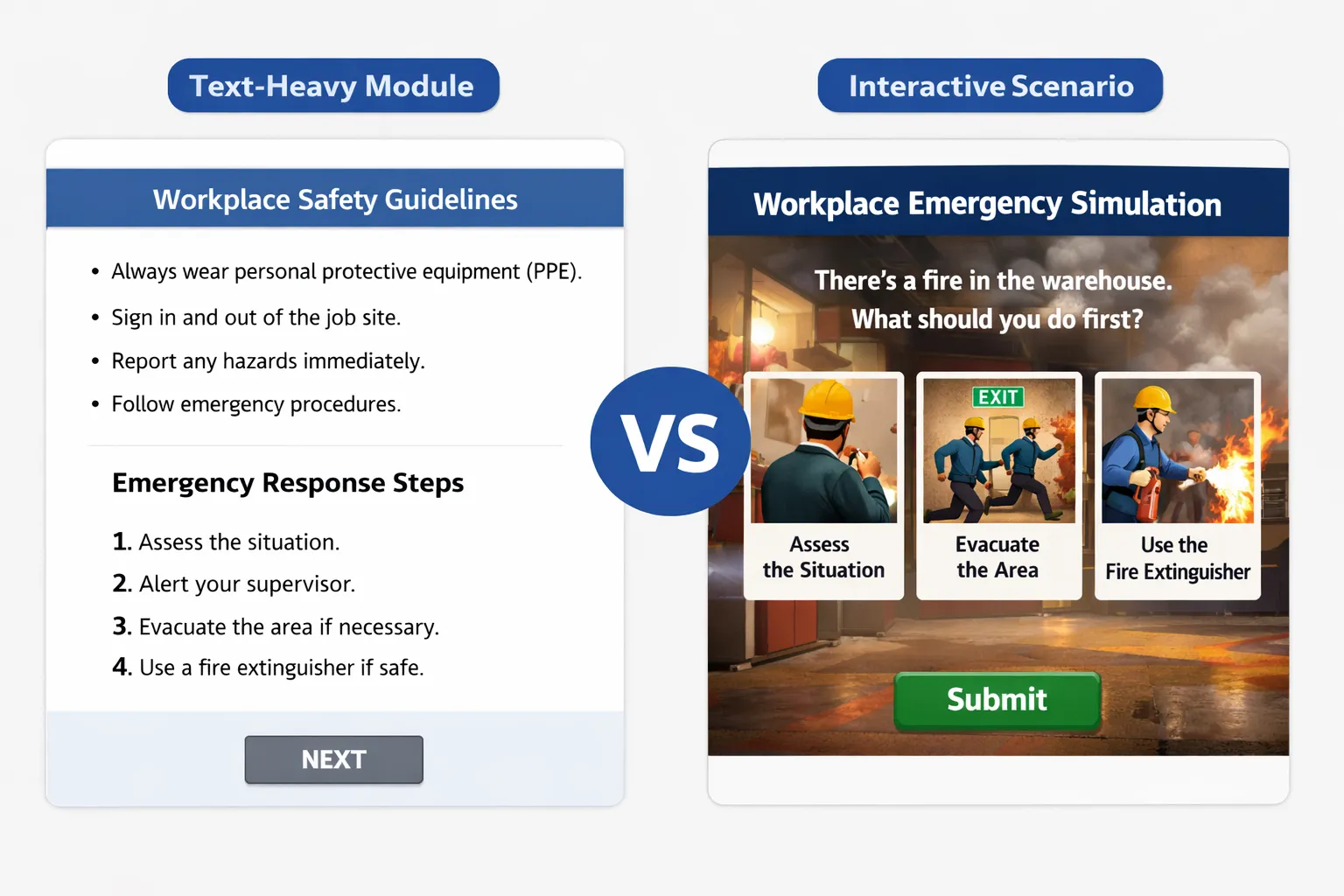
For the leadership course, early feedback revealed a lack of real-world application. In response, we added scenario-based exercises that allowed learners to make leadership decisions in a simulated environment. The result? A 20% increase in engagement and retention.
Why Learning Design Matters
The best learning experiences don’t happen by accident. They are the result of painstaking strategic planning, learner-focused design, and continuous iteration. Every learning designer’s mantra is that effective learning design isn’t just about delivering content; it’s about creating meaningful experiences that drive real-life change.
Behind every seamless, engaging course is a team of expert learning designers who carefully craft each step of the journey. Whether training future leaders, upskilling employees, or launching an educational program, the right learning approach makes all the difference.
Summary
In short, a learning designer typically:
- Analyses learner needs and organisational goals.
- Designs structured learning journeys and assessments.
- Applies learning theory and instructional frameworks.
- Collaborates with SMEs
- Tests and iterates learning experiences


